Webinar
Beyond Water: Sustainable Dust Control for Mining Roads
On-demand

REGISTER TO WATCH THE RECORDING OF THIS WEBINAR NOW
Mines around the world face the same challenge: dust from haul roads drives up water consumption, fuel use, and maintenance—while impacting safety and community relations.
In this short, practical session, Borregaard and our South African partner Road Material Stabilisers share how mines are moving beyond water to a proven, bio-based alternative.
Event details:
Live, 20 minutes + short Q&A
Date: December 9, 2025
Time: 1:00 PM (Central European Time/Oslo)
Format: Virtual webinar
What you’ll learn
Why haul-road dust is a global cost, safety, and ESG issue
The hidden cost of water: re-application, labour, fuel, and scarcity
How lignosulfonate binders work—and where they outperform watering
Results seen in the field (dust reduction, >50% less water, lower operating costs)*
How to evaluate a pilot and roll out at your site
*Based on documented trials in South Africa; results vary by site.
Who should attend
Mine Operations Managers and Haul-Road Supervisors
Environmental / Sustainability Managers
Health & Safety Managers
Contractors providing dust suppression and road maintenance

Magne Matuz-Thingnæs
Magne has more than 10 years of experience working with dust control solutions at Borregaard, supporting mining and industrial road projects across Europe, the Middle East, and Africa. With a background in chemical engineering and leadership, he combines technical insight with hands-on experience helping customers achieve safer, more sustainable, and cost-efficient road performance.
G Julian Joffe
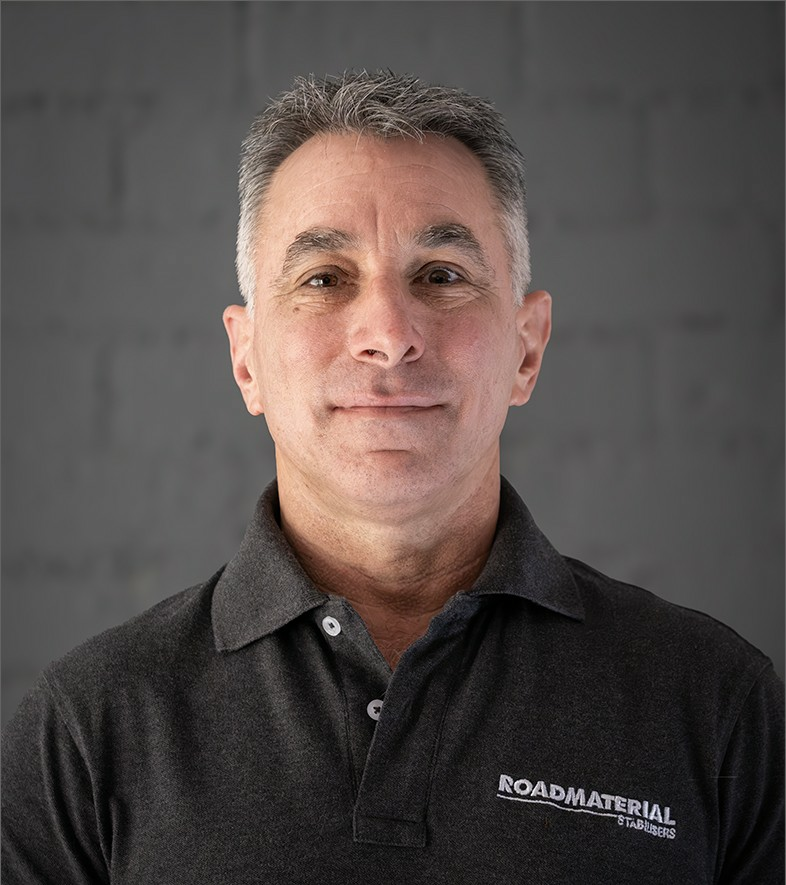
For more than 30 years, Julian has worked to improve the performance and durability of unpaved roads across Africa. Drawing on extensive experience in both the mining and civil engineering sectors, he helps mines and municipalities implement practical, long-term solutions that improve safety, reduce maintenance, and deliver measurable results.
View transcript
A warm welcome to this webinar. My name is Stefan Omvik, and I am Marketing Manager at Borregaard. It's a pleasure to have you with us today. Over the next 20 minutes, we are going to explore one of the biggest hidden challenges in open pit mining, dust generated from haul roads, and how innovative bio-based solutions are helping mines across the world reduce water use, cut CO2 emissions, and reduce the and improve safety and road performance. This is a global challenge, and our audience today reflects that. We have participants joining from mining regions across Africa, Latin America, the Middle East, Asia, and Australia, more than 40 different countries. Before we begin, just a quick note. Please feel free to submit your questions in the chat at any time. We will take them during the live Q&A session at the end. All questions will be anonymous. We have structured the session to be educational and practical, focusing on proven approaches, real results, and new ways of thinking about dust suppression. We also have prepared a couple of poll questions for you. You should see the first poll on your screens now. Joining me today is my colleague Magne Matuz-Thingnæs, Area Business Manager for Dust Solutions here at Borregaard, who will walk us through the scale of the problem, why traditional methods like water spraying are no longer enough, and what alternatives are available. Later, we will also hear from Mr. Julian Joffe, General Manager of Road Material Stabilisers in South Africa, one of Borregaard's longstanding partners. He will share on the ground insights and results from mining operations already using bio-based dust suppressants. So with that, let's get started. Magne, over to you. Thank you Thank you, Stefan. Dust from unpaved haul roads is one of the most significant and often underestimated challenges in surface mining. Across the globe, from Latin America to Australia, from the Middle East to the sub-Saharan Africa, these roads can account for as much as 90% of the mine's total dust emissions. And the consequences go far beyond visibility. It is a safety hazard, reducing visibility and increasing accident risk. Dust also poses a serious health hazard through inhalation. It increases operational cost, as dust contributes to road degradation, rolling resistance, and higher fuel consumption. And it causes equipment wear and tear, particularly on truck engines, filters, and and tires. And it brings environmental and social pressure, with regulations tightening, and communities demanding better air quality and responsible water use. In short, dust is not a minor inconvenience. It is a cost, safety, and sustainability issue that affects the entire operation. For decades, water has been the go-to solution for dust control. And while it offers short-term suppression, it's neither efficient nor sustainable. It evaporates quickly, especially in hot and arid climates, requiring frequent reapplication, often several times a day. Watering is labor and fuel intensive, demanding trucks, operators, and ongoing refilling. And many mines operate in water-scarce regions, where every liter is precious, not only for operations, but also for the local communities and ecosystems. Large mining operations can use hundreds of millions and even up to billions of liters of water every year, just for dust suppression. That's a major expense and a significant environmental footprint. Some mines also turn to other alternatives, like chloride-based salts and bitumen. While these products can suppress dust temporarily, they can harm soil, increase long-term environmental impact, and in the case of salts, accelerate vehicle corrosion. So the question is, what if there was a better way? A way to control dust effectively while reducing water use, cutting costs, and improving road conditions. One proven alternative is the use of lignosulfonate binders, bio-based materials derived from wood. These binders work by penetrating the road surface and binding fine particles together, creating a cohesive, abrasion-resistant crust. This crust significantly reduces dust generation, while also improving road strength and durability. And because the binder remains active for much longer than water, fewer applications are needed, saving both time and resources. A well-documented study by Du Plessis in South Africa from 2016 showed that applying a lignosulfonate binder resulted in 50% less water use, 54% reduction in dust, and 30% lower operation costs, compared to water alone. These results aren't limited to one region. They're replicable across mining environments, from copper operations in Chile to iron ore sites in Australia. The shift away from water is already happening. Around the world, mining companies are rethinking the dust suppression strategies. Not just for sustainability reasons, but because bio-based solutions make operational and financial sense. These solutions are increasingly part of broader ESG programs, helping companies reduce emissions, cut resource use, and meet community expectations. All while improving road safety and lowering maintenance costs. And that brings us to an important perspective, the real-world experience. I'm pleased to hand over to Julian Joffe in South Africa, to share with us how this looks like on the ground, including customer feedback and the improvements mines are achieving. He will also talk us through why lignosulfonates fit mining operations and provide some guidance on how to evaluate such a solution. Hello everyone, and thank you, Magne. My name is Julian Joffe from Road Material Stabilisers in South Africa. For nearly 40 years, our team has focused specifically on improving unpaved road networks across Africa. And for the past 25 years, lignosulfonates have been our primary dust control solution for the mining industry. Let me begin with a practical example from one of the mines we currently supply. The site in South Africa manages approximately 240,000 square meters of unpaved haul roads. In order to address the dust. In order to address the dust, the site operated three 30,000 litre water bowsers or trucks running continually for both day and night shifts to keep dust under control, especially during hot, dry season. With water alone, they needed each bowser to do around six loads per bowser per day shift, three loads per bowser at night. In total, the site used approximately 800,000 liters of water per day just for dust suppression. Dust levels were still difficult to manage, and the road surface deteriorated under this constant watering and heavy traffic. With the introduction of the lignosulfonate program, the improvement was immediate. The application frequency dropped to a single application during the day and one at night, maintaining the same dust control with no additional watering between treatments. Daily water use fell to around 360,000 liters, providing an average of a 66% reduction. With the reduced application requirements, the mine was also able to take one water truck out of rotation and reducing daytime filling, creating additional savings in fuel, labor and equipment hours. This kind of outcome is typical across the mines we work with. Fewer applications, stable dust control, better road surfaces, and significantly lower operational cost. Here's what this looks like in practice. On the left, you can see a road under typical water-only program. On the right, the same road after treatment. Improved visibility, no dust plumes, and a more stable surface. Three reasons mines adopt lignosulfonates is that the implementation is very straightforward. Specialized equipment is not needed. Standard water trucks or bowsers, graders, and rollers are used. The equipment every mine has already available is fully suitable. Because the product doesn't alter the fundamental characteristics of the gravel, road maintenance continues as per normal. In fact, in most cases, we see that the frequency of maintenance decreases because the treated surface is now bound with a greater resistance to abrasion and less prone to breaking down. Also of note is that the product is water-soluble and non-corrosive. Use of lignosulfonates will not damage plant equipment, pipes, pumps, or spray systems. An overspray can simply be washed off with ordinary cleaned water. Finally, although haul roads are usually the largest source of dust emissions on site, lignosulfonates are also very effective on static areas, such as tailings, stockpiles, berms, and other wind-exposed surfaces. These typically need only a single treatment to provide three to six months of performance. I've also seen the consequences of when dust control is not addressed. In my career, I've worked with two mining sites that ended up closing permanently, not because the ore ran out, but because they didn't have enough water to meet both plant requirements and dust suppression needs. Both sites were in drier regions, with a short rainfall season, and were located either in an ecologically sensitive area or located close to local communities. Insufficient availability of water to meet both plant and dust suppression requirements and pressure from local communities forcing frequent stoppages finally resulted in the closure of the sites. It is a reminder that the dust control is not just about visibility. It's about operational continuity, community relations, and protecting production. For anyone thinking about evaluating a lignosulfonate program, my recommendation is simple. Start with one or two representative road sections and track three things. Water usage, dust levels, and grader or maintenance frequency. Compare this against your current watering program. Every mine I've worked with has been able to quantify improvements within the first week, whether reduced water use, smoother roads, or lower operational costs. In summary, what we see consistently here in our area is that significantly less water usage, fewer bowser hours, stronger safer roads, and lower cost of operation, all achieved using the equipment mines already have. Thank you, and I look forward to your questions during the question and answer session. Thank you, Julian. It's always valuable to hear what happens on the ground, and your examples show exactly why more mines are rethinking So, it seems as if we are back again. If technology allows it, we will continue. Thank you for sticking with us, and sorry about the mess. So, we can continue, Magne, you can start. Yes. So, thank you, Julian, for your presentation. It's always valuable to hear what happens on the ground, and your examples show exactly why more mines are rethinking their approach to dust suppression. We have now a second poll for you. Let me continue then. So, I will introduce you to the solution behind many of the results presented by Julian, namely Dustex. Dustex. Dustex is often referred to as 'Nature's best binder'. It's a bio-based product made from wood lignin, the natural glue that binds plant fibers together. That makes it a highly efficient binder for dust control and road stabilization, whether on mining haul roads, gravel roads, or other dust applications. Dustex is sourced from sustainably managed forests and certified as a circular raw material. And because of its origin and production processes, the product has a documented low carbon footprint, supported by LCA and EPD declarations. The product is also certified as 100% bio-based by the U.S. Department of Agriculture. So, why do mines choose Dustex? First, performance. Dustex has been used for decades to stabilize roads, and control dust, and control dust, consistently delivering measurable reduction in dust levels, water use, and operational costs. Second, sustainability. Again, it's a 100% bio-based product, and LCA shows significant CO2 reduction compared to water, salt, or bitumen-based approaches. Third, safety and road quality. By creating a stronger, more cohesive surface. Dustex improves visibility, Dustex improves visibility, reduces airborne dust, and lowers equipment wear. And finally, global availability and trust. As we can see on this map, Dustex is used across all major mining regions, and it's sold in more than 30 countries worldwide. It is produced by Borregaard, a Norwegian biorefinery company established back in 1889. which today operates plants and sales offices in 13 countries. In short, Dustex is a safe, sustainable, and globally proven alternative to water-based dust suppression. Helping mining operations cut water use, improving safety, and achieve their sustainability goals without compromises. Thank you, Magne. And also, thank you, Julian, for sharing your insights. Before we head over to the Q&A session, I just wanted to thank you, everyone, for attending. We have had a number of questions also being submitted in the chat, so thank you for your enthusiasm. If you have any questions with regards to Dustex and how this product may help you improve your operation, you can either scan the QR code on the screen to visit our website, or you can go to Dustex.net, or you can go to Dustex.net to learn more about the product. We also invite you to send an email to our e-mail address listed here if you have any questions or things you would like to ask us which you have not posted in the chat or which we did not touch on today. So I think then it's time to look at the questions we have received. And we will probably not have the time to go through all of them today. We will choose quite a few. But those who will not get a reply from us during this live session will get a reply from us by email over the coming days. Thank you. So the question we can start with here. Let's have a look. The first one probably goes to you, Julian. How do I know if my mine is a good candidate for lignosulfonate-based dust control? Okay, not a problem. To decide if you need the lignosulfonate, first you have to determine if you have a water problem. If you are spending a reasonable amount of time and effort on maintaining your roads, the use of the Dustex is not just about the suppression of dust. It also results in better performing roads. So even if your dust problem is, let's say, manageable, using water alone leads to deterioration on the roads. So if your roads are requiring frequent maintenance, frequent attention, then you are a suitable candidate. And the use of Dustex will definitely assist you in reducing your overall road cost. Thank you. Then we can move on to the next one. And I think, Magne, this one is probably for you. Please tell me, is the product diluted with water? If so, how to ensure its effectiveness in rainy summers? Yeah. Good question. I would say that Dustex is a water-soluble product. And that's one of the beauties, which means that we can supply Dustex as powder and dissolve it locally. When you use it on a gravel surface, keep in mind that Dustex, it's a binder. It's a road binder. It's not like applying salt, which is kind of hygroscopic, holding onto the humidity. So it binds the road together. So even in the very wet seasons, if you have managed to kind of incorporate the Dustex into the gravel surface with a grader or multiple applications, it will bind the surface together. If you then have a nice profile, making sure that the water is running off the road surface, you will have an even stronger road surface, even during wet season. Julian, do you have any additional comments from your area? You have both dry, very dry periods and very wet periods. We do supply customers in very wet regions. And we find that where we anticipate water being a problem, as Magne has said, we incorporate it into the top wearing course. The other situation we find is that the longer we use the Dustex because of the maintenance, we don't lose wearing course. When we blade the road, we don't leave the material on the side. We incorporate that binder-rich material back over the surface. So our crust or product-rich crust builds up to 20, 30, 40 millimeters thick. It gets quite hard under the haulage traffic or the traffic. And the longer you use Dustex, the less it is influenced by the rainfall. Thank you. Let's move on to the next one. I think this one is for you as well, Julian. It relates to what you talked about in your session. How quickly can mines expect to see results after switching from water to Dustex? Well, from water to Dustex, to be very honest, it's dramatic. We usually do the initial application over one to two days. And by the second day, it's a significant difference. Within the first week, there's a dramatic change. Most of the mines we start at, even if they provide us with an initial section of road, usually by the time we finish that, we're going to be able to do that. And then we start at the next section of road. They're spraying other roads because the difference and the result is so dramatic. You will see it immediately the day afterwards. And as you go on, it is quantifiable. You notice it. You don't have to measure it. Another question for you, Julian. Does the chemistry or the water content or type of water matter when mixing with the lignosulfonate? Do you have any experience on that? No. So Dustex, first of all, is not sensitive to overspraying or underspraying if it's incorporated into a program. We've used acidic mine water. We've used seawater. We've used non-potable water. I have yet to find in my 25 years of using the product that I've had an incompatibility with any problem water. Good. Let me see. So Magne, we have a few questions asking about environmentally or environment-related issues here. So how does Dustex compare environmentally to alternatives like salt or bitumen? It's quite a general question, but do you want to comment on that? Yeah. If you compare product to product, so meaning comparing Dustex with either calcium, magnesium, chloride, or even bitumen, the product itself compared, there is a massive impact or difference in the CO2 when using Dustex. Dustex. Dustex compared to salt is like 50% less CO2 per kilo of the product. And if you compare it with bitumen, it's up to 70-80% different CO2 per kilo of product. So yes, there is a significant less impact of CO2 by using Dustex. Okay. We're almost running out of time here. So a number of people have asked if we can share the slides. We will send you a link after this webinar where you can rewatch the presentation. If you send us an email, we can also share the slides with you afterwards. Thank you so much again for joining us. Sorry for the technical problems we had there in the middle. Still hope that you found this both useful and relevant for your own operation. Please do not hesitate to contact us for any questions you may have. Thank you so much for attending. Goodbye. Thanks. Bye. Bye.